
Feis Info
In traditional Irish Dance, a Feis is a competition for dances of all ages and skills, where they can showcase their talent.
What is a Feis?
First and foremost, “Feis” (pronounced phonetically “fesh” in English) is an Irish word meaning “festival” and has come to describe a traditional Gaelic arts and culture festival. The plural form of the word is “feiseanna” (prounounced “fesh – anna.”) Feiseanna are held all over the world.
In Irish dance, there are different levels of competition: beginner, advanced beginner, novice, prizewinner, preliminary championship, and open championship.
Dancers advance levels by being awarded in different dances. The dances include reel, light jig, Hop jig (single jig), treble jig (hard shoe jig), slip jig, hornpipe, traditional set.
In a feis a variety of soft and hard shoe dances are performed. Dancers at the Beginner through Prize Winner levels are assessed by a single judge. Dancers in the Championship level are assessed by a panel of three judges. All dancers are ranked and typically the top 50% are awarded at every level. Medals are common initially – with trophies being introduced at the higher levels.
WHAT TO BRING
Costumes
Dance Shoes
Hair Accessories & Earrings if wearing any
Extra socks & shoelaces
Safety Pin or Number clip to attach compettor number to costume
Brush, Bobby pins, Hair Ties, Haspray
Band Aids
Small mirror
WATER
WHEN YOU ARRIVE
Arrive at the Feis about 45-60 minutes ahead of your scheduled start time. Allow time for parking and collecting your competitor number. Locate the stages for each of your competitions. Find a spot to place your things and then its time to warm up! Dancers should take the opportunity to listen to the live music at each of their stages so that it is not unfamiliar. Timing is the most important factor that the judges evaluate.
Dancers should run through all their dances and remain focused until their competitions are over. Please encouage your dancer to rehearse independently and stay focused. Tune out the distractions until the dancing is over. We want dancers to feel prepared, confortable and proud of their performances – and execute the best version of their steps. Arrive with a positve attitude and get in the best zone for success! There will definitely be time for friends, fun, food, raffles etc. after the dancing.
PARENTS – please do not hover near the lineup of dancers!! Send your dancer to the lineup with a “good luck” and then cheer from the audience. Your confidence and preparation are contagious — so is your nervous energy.
**NOTE** Videorecording is prohibited
Types of Dances & Levels
In the solo dancing events, the children compete in one of six levels, depending upon their abilities – as evidenced by awards won in previous competitions. Within each of these six levels, competitions are further broken down into age brackets. Scores are from independent, certified judges and are based on an evaluation of the dancer’s Timing (rhythm), Carriage (deportment), Construction of Steps (complexity), and Execution (presentation). The levels are defined in the standard feis syllabus as:
- Beginner is a competitor who has not taken Irish dancing lessons from a registered teacher prior to September 1st of previous year. Dancer must move into Advanced Beginner the following year regardless of wins.
- Advanced Beginner is a dancer who has taken lessons from a registered teacher for more than 1 year. An Advanced Beginner who wins a 1st, 2nd, or 3rd place must advance to the Novice category in that particular dance the next year. NO SOLO COSTUMES ALLOWED. Skirt & blouse or school costumes ONLY.
- Novice is a dancer who has previously won a 1st, 2nd or 3rd in Advanced Beginner. A Novice who wins a 1st place must advance to the Prizewinner category in that particular dance by the next year.
- Prize Winner — is a dancer who has previously won a 1st place in Novice in a particular dance.
- Preliminary Championship— competitors who have placed 1st in Prizewinner solo light (reel/slip jig) AND heavy dance (jig/hornpipe) at any feis. Dancers do not have to move out of Prize winner until they feel prepared.
- Open Championship — Dancers who have won THREE 1st place Prelim Championships.
How They Appear on Stage
Children appear on stage in twos or threes (depending on stage size), dancing simultaneously to the same music. Each will display a number on the front of the uniform. They will most likely not be paired with a student from the same school, and therefore will not be performing the same steps. Competitors step out in turn and perform their steps, return to line and wait for the rest of the competitors to finish. Standing in line properly before an after their turn is part of the judge’s evaluation.
Competitors (with the exception of beginners/advanced beginners who will have assistance) need to rely solely on their knowledge of the music to know when to start (since they will not recognize the steps from other schools). When the preceding dancer has 8 bars remaining (the left foot of the second step) the next dancer should step out of line, into a good starting position. This is rehearsed at class.
One should place oneself where the judge has a clear view, as close to the center of the stage as is sensible, and should be in front of the on-stage line (that way their feet won’t cause any tripping). Considerable time is spent learning when to start and McDade-Cara dancers really should not need help. Count the bars of music just as is done in class – each dancer does two steps (32 bars in total) and then the next dancer begins.
It is important to appear confident and to let the judge see the talent !! ( a nice smile never hurts either).When all the competitors on the stage have danced, the next line of competitors will advance to the stage and dance. A full competition may have several stages full of dancers.
Competitions will NOT all take place on the same stage so please carefully review the posted stage schedule to locate each competition in whaich your dacer is entered and proceed from stage to stage as necessary. A typical feis will have 2-3 stages for Beginner through Prize Winner competitions and an additional couple of stages for Championship Competitions.
Costumes
A costume is required of each dancer entering a competition or performing with the school. As dancers advance to a competitive level and/or participate in performances with the School, a costume becomes a requirement.
Currently our McDade-Cara dancers should follow these rough guidelines:
- Beginner and Advanced Beginner –NO SOLO COSTUMES ALLOWED. Skirt & blouse, Jumper or school costumes ONLY, hair neatly curled, white socks & polished soft shoes.
- Novice — solo costumes are permitted but not encouraged. School dresses are perfect!
- Prize Winner — solo costumes are permitted
- Preliminary and Open Championship— Solo costumes
There is a worldwide rule prohibiting make up until dancers reach the Under 11 age group
During the Performances
It is very important to properly secure the laces on your shoes. A loose lace may come untied while dancing and cause mistakes or injury. It is VERY IMPORTANT that a parent/adult double knot the laces – checking them prior to each event.
If a dancer should make a slight mistake he/she should always recover and continue – DO NOT STOP (no score is even given to those who do stop)
If a shoe comes untied, a headband falls off, a dancer falls, dancers bump into each other…. These things should be ignored as much as is possible. Do not pick up anything that falls – until finished, do not stop dancing, don’t make any on-stage apologies – continue dancing.
Please be patient with event organizers as there are many many dancers, parents, musicians, judges etc that they are trying to accommodate.
And, as always, have fun – it’s really NOT all about winning or losing !! Good luck dancers!!
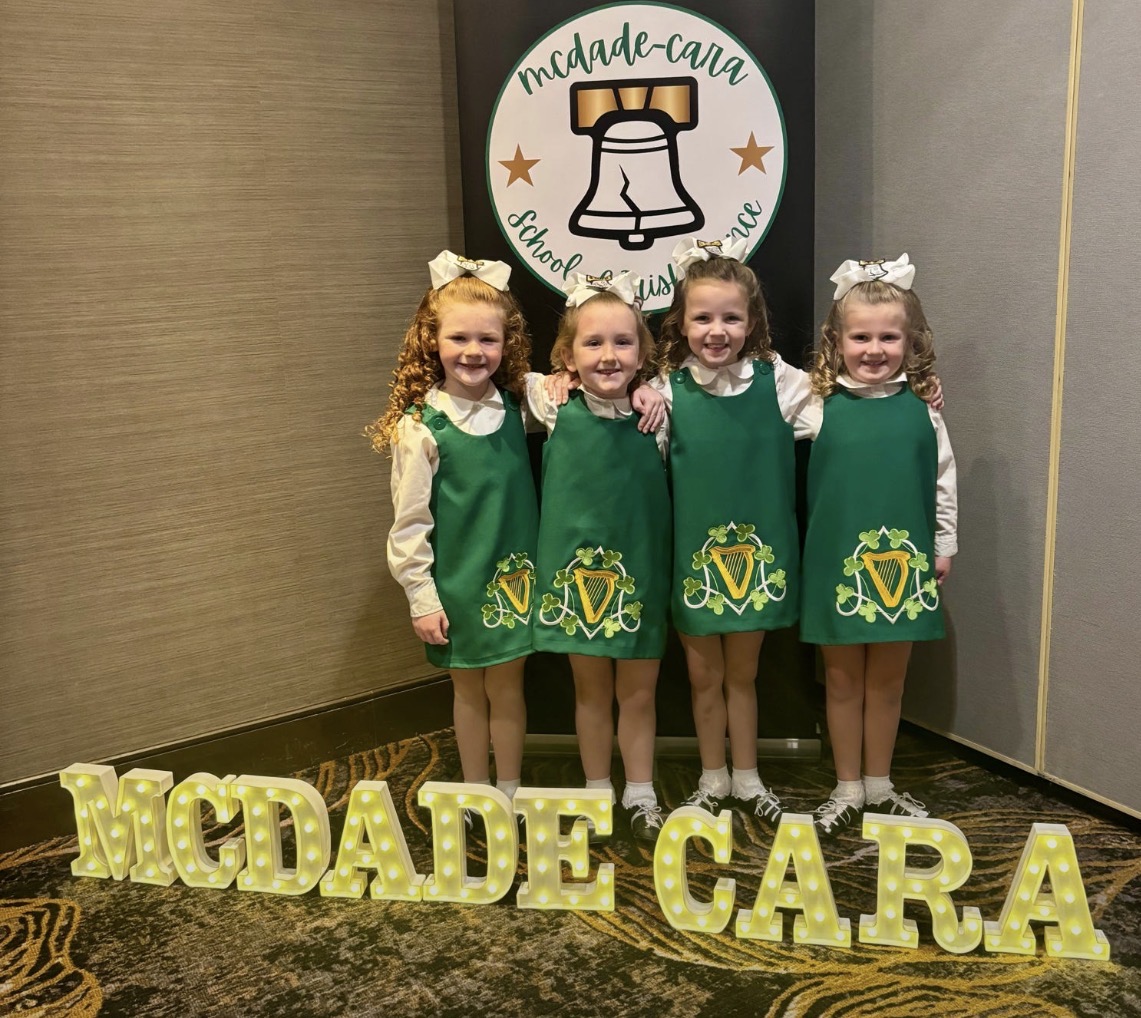
- Beginner / Adv. Beginner Jumper with white blouse
- White socks
- Hair neatly curled and pulled away from the face
- White bow
- Polished shoft shoes with white laces
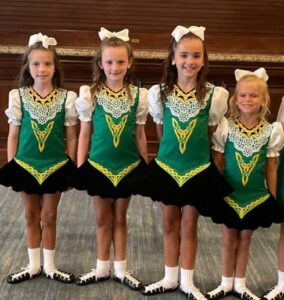
School Dress Ages 7-11
- White socks
- Hair neatly curled and pulled away from the face
- White bow
- Clear crystal earrings suggested
- Polished shoft shoes with white laces neatly tied with no loose ends
- Polished and TAPED hard shoes, tied tightly
- Tanned legs suggested for certain major events
- Orders are placed twice a year for new dresses and secondhand dresses are often posted on our Facebook Parent Page
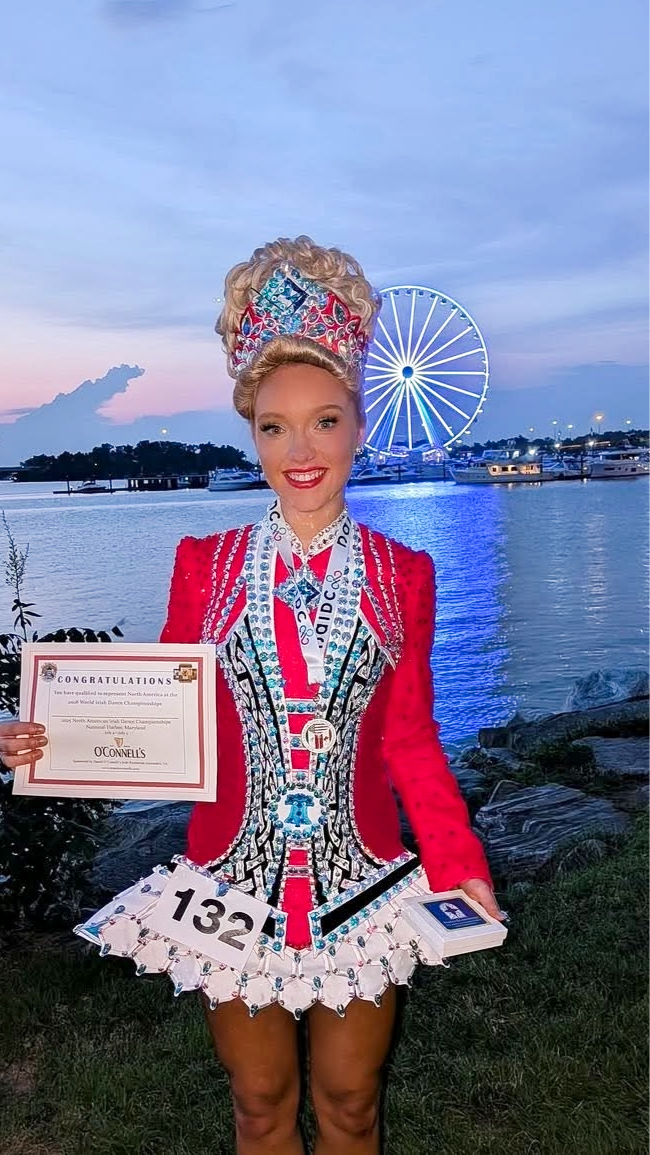
Solo Dress for Champs+ Level
- white socks
- white shoelaces
- taped hard shoes
- tanned legs suggested
- stage make up suggested
- wig suggested for events on a big stage or major championship
- solo dresses must be approved by a teacher

School Dresses ages 11 & Up
- Black OPAQUE tights
- BLACK shoelaces
- Make up suggested